Saturday, June 27, 2015

What is Government 3.0 ?

Preparing my talk for the Samos 2015 Summit on ICT-enabled governance I noticed a scarcity of resources for Government 3.0 and the new paradigms for the public sector beyond 2015.  Apart from some early developments in Korea and a few presentations, not much to see on what is coming in this vivid domain.  So, I prepared a slideset that can be seen online below, and I only copy/paste a couple of things here:

Government 3.0 definition

Government 3.0 refers to the utilization of Information and Communication Technologies and neighboring scientific and technological domains, towards societal problems solving, resource optimization and citizen well-being, through civic and enterprise collaboration at local and international level


The paradigm shift for Government 3.0 


The e-Governance Hype Cycle


My complete slide set can be found at : http://www.slideshare.net/charalabidis/government-30 


Saturday, June 13, 2015

Workshops on Open Data and Entrepreneurship at Krems, Austria


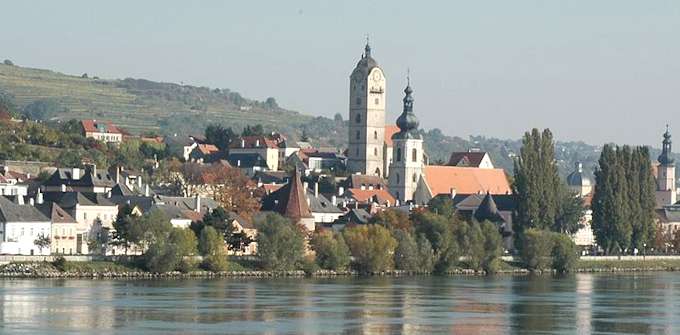
Being at Krems, Austria is a very nice experience, by itself.  So calming, so picturesque and SO clean that redefines a few performance thresholds and levels of citizen commitment.  A little difficult to reach, maybe as much as it should, by the somewhat busy but also well-managed Vienna International Airport, but very easy and welcoming when you get there - via three train connections, one change involving some goodish walking, should you take the train path (no direct bus, too). Thanks to our host Peter Parycek, friend and new professor of e-governance at Krems University, a shuttle bus took us there in 60 minutes. 

Krems an der Donau
Danube University Krems, exists within a very cosy, manageable Campus, combining the old buildings of the former tobacco processing / cigarette factory with a newly built, modern set of auditoriums and  labs.  Utilising such halls and some nearby hotels, the CEDEM Conference on eDemocracy and Open Government took place, together with the SHARE-PSI 2.0 meeting on open data and public sector transformation.

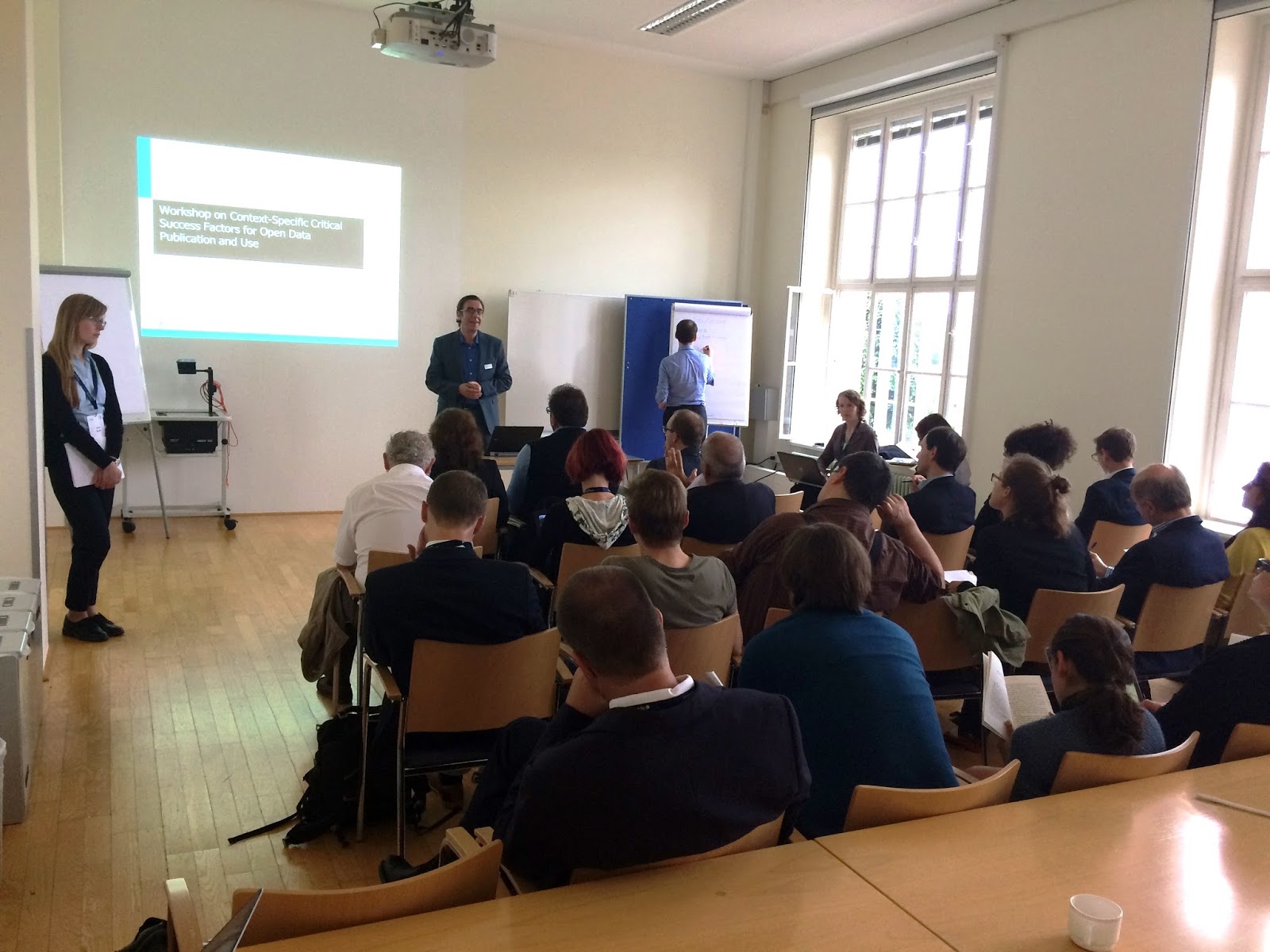
I has the pleasure to co-organise a workshop on Open Data critical success factors, together with colleagues from Netherlands, Sweden and Austria.  The workshop touched upon the key issues that public sector organisations, enterprises and citizens have to deal with, in order to have success in curating, publishing and using open data.  Get a glimpse at the taxonomy of critical success factors for open data, still being restructured through a series of workshops worldwide.

Workshop on Critical Success Factors for Open Data 
Then, I had the experience of organising another workshop on "University - based Business Accelerators", presenting and deliberating on the work we do with Aegean Startups, our new incubator in University of the Aegean.  My opening presentation on Business Accelerators lists some of the functions and services of these new organisations that Universities now put in place.

Participants of the Workshop on "University-based Business Accelerators"


Thursday, May 7, 2015

A visit to Bletchley Park

During April 2015, during my latest visit to London, I spent one morning in Bletchley Park, "once Britain's Best Kept Secret" as they call it.  Bletchley is about 1 hour by train from London, on the north.  The place has become very popular after two events in 2014 (I do not really know if one influenced the other):

One of the more than 20 ENIGMA machines
- looking brand new
- The "Imitation Game" movie that went the most popular movie about the story of Alan Turing and the codebrakers of the second world war

- The complete restoration of the place, which opened for the public at the beginning of 2015 (Bletchley was there before, but without the restoration there was not much to see).

So, is it worth the visit ? (the entrance is around 15 GBP, the ticket might cost another 15 GBP and you will need 4-5 hours at least).  My answer is yes.  The visit will give you some unique insights in the ENIGMA machines, the code-braking techniques and of course the Bombe ! (this weird mechanical computer, that was used to find the positions of ENIGMA wheels based on intercepted messages).

Also, you will able to see not one, but actually two Bombes (Not originals - as all of them were destroyed right after the end of the war.  Or at least this is what the British Government said at the time).  One was made for the needs of the Imitation Game movie (it does not seem to work, but is a very well-made replica) and a full-functioning replica made by the Bletchley park and collaborators.


With the working replica of the Bombe 
Another nice opportunity for the visitor is to see all the restored offices and warehouses of the centre, as it was during the war.  You can also have a seat in Alan Turing's office !

Working at Alan Turing's office at Blechley Park

A nice add-on is the near-by National Museum of Computing, where at an extra cost yo can see the remake of the allegedly first-built electronic computer  / Colossus (built in 1943, before the ENIAC in US).

The Colossus

The MCIS 2015 Conference in Samos


The  9th Mediterranean Conference on Information Systems was held in Samos on 3-5 October 2015, organized by the Information Systems Laboratory (ISL) of the Department of Information and Communication Systems Engineering, of the University of the Aegean, under the auspices of Association of Information Systems (AIS).  The main theme of this year’s Conference is “Information Systems in a changing economy and society”, reflecting the critical role Information Systems play for enterprises and administrations, in their effort to accommodate radical economic and societal changes. MCIS 2015 solicits original contributions in the following non-exclusive tracks:

Tracks
·       IS and Organizations
·       Smart cities
·       Big data, data protection and privacy in a global society
·       Electronic Government (GOV 2.0)
·       Persuasive Information Systems
·       Project Management and Beyond – accommodation of the critical role of information systems
·       Open Innovation & Knowledge Management
·       Security of Information and IS
·       Digital Entrepreneurship and the Future Enterprise

Paper Submission
We invite research papers that present original contributions to the theme of the conference or the themes of the special tracks in the form of:
·       Full research papers
·       Extended abstracts and short research-in-progress papers
·       Case studies (research and teaching)
·       Panel proposals

Submissions must be original and should not have been published previously.  Papers should be submitted in English, electronically as pdf files via EasyChair: https://easychair.org/conferences/?conf=mcis2015

Authors should indicate, in the main text of the paper, the track for which they wish their paper to be considered. If no track is indicated the paper will be considered for the conference main track. Submissions will be subjected to peer review. Each accepted paper should be presented by one of the authors and accompanied by at least one full registration fee payment, to guarantee publication in the proceedings.  MCIS is a major international conference on Information Systems, endorsed by the American Information Society (AIS) and its proceedings are published in the AIS library and indexed in all major scientific indexes.

Keynote Address                                                                        
Christopher Tucci, Professor of Management of Technology, École Polytechnique Fédérale de Lausanne (EPFL) “Information System and Business Model Challenges in The Era of Future Digital Enterprises‏”

Doctoral Consortium
Building upon the success of previous years, MCIS 2015 will include a Doctoral Consortium (DC) program. MCIS 2015 Doctoral Consortium aims to offer doctoral students the opportunity to interact and connect with first-class researchers working in IS fields in a relaxed yet stimulating setting. Ph.D. students currently working on their dissertations are eligible for nomination submission. Candidates should not have successfully defended their dissertation prior the Doctoral Consortium meeting that will be held on October 3rd, 2015, in Samos.  Submissions should be sent by email to ddrosos@aegean.gr‏ by midnight June 15, 2015, Greek time (GMT + 02:00), 2015. More information at http://mcis2015.eu/doctoral-consortium/
               
Programm Committee
M. Amami, RMC, Kingston, Ontario, Canada
S. Arvanitis, University of Zurich
H. A. Ismail, German University in Cairo
M. Kajtazi, Örebro University
E. Kolkowska, Örebro University
A. Kokkinaki, University of Nicosia
F. Lampathaki, National Technical University of Athens
G. Lekakos, Athens Univ. of Economics & Business
D. Lekas, Univ. of the Aegean
L. Mitrou, Univ. of the Aegean
A. Montalero, Politecnico di Torino
A. Polydoropoulou, Univ. of the Aegean
A. Pouloudi, Athens Univ. of Economics & Business
B. R. Schlichte, Aarhus University
P. Svejvig, Aarhus University
M. Themistocleous, University of Pireaus
C. L.  Tucci,  École Polytechnique Fédérale de Lausanne

Conference Chairs
Dr. Euripidis Loukis, Associate Professor, University of Aegean, eloukis@aegean.gr
Dr. Yannis Charalabidis, Assistant Professor, University of Aegean, yannisx@aegean.gr

Program Chairs
Dr. Spyros Kokolakis, Assistant Professor, University of Aegean, sak@aegean.gr
Dr. Maria Karyda, Assistant Professor, University of Aegean, mka@aegean.gr

Doctoral Consortium Chair
Dr. Dimitrios Drosos, Lecturer, University of Aegean, ddrosos@aegean.gr

Conference Venue
The Conference took place in the Samaina Inn Hotel, at Karlovassi, Samos, which is just a stone’s throw away from the beach. The hotel has a 230-seat conference centre, air-conditioned and stylishly furnished rooms and offers a wide range of activities.


http://mcis2015.eu/


Saturday, March 21, 2015

Workshop on raising citizen awarenness on Open Data

The  workshop "Raising awareness and engaging citizens in re-using PSI" was held within the SHARE PSI 2.0 conference in Timisoara, Romania on March 17, 2015.  The workshop was co-chaired by Daniel Pop, West University of Timisoara and Yannis Charalabidis, University of the Aegean.  The workhop touched upon ways to enhance citizen participation and engagement in reusing open governmental data.  

Several experiences to boost opendata uptake by citizens and entreprises were presented and discussed, resulting in a set of proposed "ways":

Way #1: Give them a "home"
An open data portal has to offer the ability to citizens / users to create and maintain a profile

Way #2: Make them customers / Create an Open Data marketplace
When a citizen cannot find the dataset he is looking  for, he can put a request that is channeled to the appropriate administration

Way #3: Make them opendata publishers
Allow for upload of datasets by users

Way #4: Allow working on datasets / make them curators
A dataset can be processed by a user and then republished as a new version.  Datasets can be visualised, extended, linked by users

Way #5: Give them incentives
- Measure and publish popularity of the users, based on their activity.
- Give incentives for data usage / utilisation (e.g. free tickets to community events, free parking, to most prominent users)
- Organisation of competitions / datathons with prizes for the best applications
- Organisation of data journalism competitions  for users

Way #6: Involve them upfront
Organise meetings of interest groups (e.g. finance, environment, etc) among interested citizens and entreprises. Use questionnaires, for initial screening of ideas and people.

Way #7: Provide specific support for entreprises
Companies have different viewpoint than citizens: they need data quality, availabiliity, support, etc.  So, provide something like that for companies and utilisation will be higher.

Way #8: Promote the creation of journalism teams
People might want to “tell a story” acting like data journalists within the local communities, but they might not have the skills needed
So, make small groups among citizens to work around open data, generating small or larger stories.

Way #9: Provide training
Citizens without the proper knowledge cannot take advantage of incentives targeting more advanced people.
So, invest in training citizens on basic digital skills (make a web site, work with a dataset, write a story, etc)

A slideset of the main outcomes can be found here: http://www.slideshare.net/charalabidis/ways-to-boost-utilisation-of-open-data-by-citizens while a full description will be available in the SHARE PSI 2.0 project open database of best practices. 


The workshop panel. From left to right: 
André Lapa, AMA, Portugal (rapporteur)
Noël Van Herreweghe, CORVe, Belgium
Chris Harding, The Open Group, UK
Jan Kučera, University of Economics, Prague
Daniel Pop, West University of Timişoara, Romania (co-chair)
Yannis Charalabidis, University of the Aegean, Greece (co-chair)
Peter Winstanley, Scottish Government, UK
Robert Ulrich, KIT, Germany
Petya Bozhkova, Balkan Services, Bulgaria
Szymon Lewandowski, DG Connect, European Commission